
The world is searching for solutions to the plastics problem, and Australian company Samsara Eco is leading the charge. Their enzyme-based recycling technology has the potential to transform plastic waste into reusable building blocks, creating a truly circular economy. At the Jerrabomberra Innovation Hub, Samsara’s laboratories are where this breakthrough science is being tested, refined, and scaled.
For research at this level, the laboratory environment is as important as the science itself. Stable conditions, precise ventilation, and resilient safety systems are essential to maintain integrity in experiments and ensure safe operation. Any interruption could risk slowing critical progress in the race to reimagine plastics.
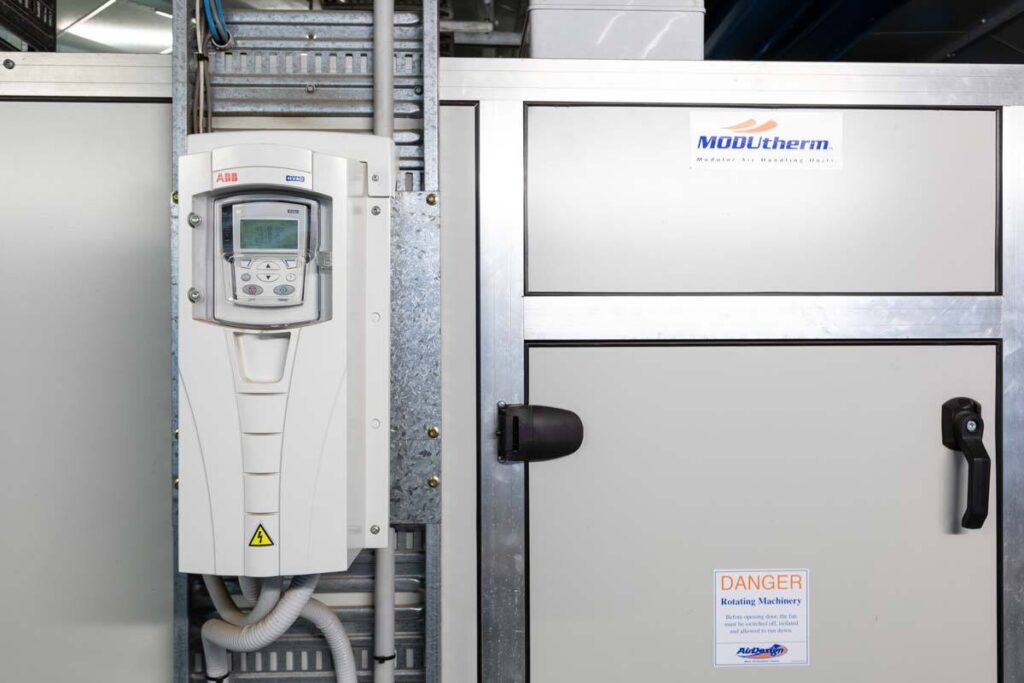
This is where IES Automation contributed. As part of the Innovation Hub works, IES delivered the laboratory Building Management System (BMS) to integrate and manage the core environmental systems that support research. Built on a Reliable Controls® platform, the system provides flexibility, oversight, and reliability — helping ensure critical conditions are maintained without disrupting ongoing work.
The project was also delivered under a tight turnaround, with laboratory research needing to continue unimpeded. Careful sequencing and coordination were essential to maintain safety and performance, drawing on IES’s expertise in high-stakes environments such as laboratories, healthcare, and archives.
For Samsara, these labs represent the front line of innovation. For IES, the project highlights the vital but often unseen role of critical environment systems: creating the conditions where science can succeed. As the demand for sustainable solutions grows, projects like this show how breakthrough research depends not only on brilliant ideas, but also on the building systems that safeguard them.